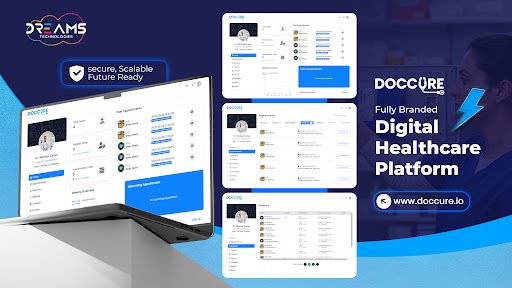
Building an AI chatbot that performs well in production requires a significantly more disciplined process than most organizations expect when they start the project. The perception that chatbot development is a relatively contained technical task, pick a platform, define some intents, connect a knowledge base, and launch, leads to a predictable set of problems. Bots that work in testing but break on real customer inputs. Integrations that were not scoped properly and delay launch by weeks. Escalation flows designed as an afterthought that frustrate customers at the exact moment they most need a good experience. This guide covers what the AI chatbot development process actually involves from the first decision through to a live, performing system, drawing on the experience of building conversational AI across healthcare, retail, financial services, and enterprise operations. Step One: Define the Use Case Before Anything Else The most common source of chatbot project failure is insufficient clarity about what the bot is actually supposed to do before development begins. A use case definition that says “customer support chatbot” is not sufficient. You need to know which specific intents the bot will handle, what data it needs to access to resolve each one, what the escalation rule is for each intent, what channels the bot will be deployed on, and what success looks like in measurable terms including containment rate, resolution time, and customer satisfaction score. The time invested in this definition step pays back many times over in a cleaner build, fewer scope changes, and a system that your team can evaluate objectively after launch. Step Two: Architecture Decisions That Determine Everything Downstream AI chatbot development in 2026 involves a genuine architectural choice between approaches that have different tradeoffs. A purely generative approach using a large language model produces natural, flexible responses but requires more guardrail engineering to ensure consistency and accuracy. A structured dialogue management approach using intent classification and deterministic flows is more predictable but less capable of handling conversational complexity. The hybrid architecture that Dreams Technologies uses in enterprise chatbot implementations combines the strengths of both, using large language model generation for natural responses within a structured dialogue management framework that keeps flows on track and applies deterministic logic where consistency is non-negotiable. This is the approach used in conversational components of platforms like Doccure, where patient interactions require both naturalness and clinical reliability. The retrieval layer is the other critical architecture decision. A chatbot that cannot access your actual systems and current data is limited in the problems it can resolve. Retrieval-augmented generation connected to your knowledge base ensures that responses are grounded in your verified content. Direct system integration for transactional queries, order lookups, appointment bookings, and account actions, is what turns a conversational AI deployment from a sophisticated FAQ tool into a genuine resolution engine. Step Three: Data Preparation and Training The natural language understanding model at the core of your chatbot needs to be trained on conversation data representative of your actual users and use cases, not generic examples. This means collecting or constructing a dataset of real or realistic utterances for each intent, annotating entities accurately, and building evaluation sets that test performance on the edge cases that will appear in production. For domain-specific use cases in healthcare, financial services, or other specialized sectors, fine-tuning on domain vocabulary and terminology is the difference between a model that handles your users’ language naturally and one that misclassifies a significant proportion of real inputs. Step Four: Integration, Testing, and the Escalation Layer Every integration with a backend system adds scope, testing effort, and ongoing maintenance responsibility. Scoping integrations accurately during the design phase, building them with authenticated, well-documented connections, and testing them against live data before launch are the steps that prevent the integration layer from becoming the source of post-launch incidents. The escalation layer deserves the same engineering investment as the automated resolution flows. When a customer transfers to a human agent, the context passed to that agent, including conversation history, resolved and unresolved intents, and retrieved account data, determines whether the handoff feels seamless or requires the customer to start over. Step Five: Launch, Monitor, and Improve The chatbot development process does not end at launch. A phased rollout that validates performance on real traffic before scaling to full volume, monitoring infrastructure covering intent accuracy, fallback rates, escalation frequency, and customer satisfaction signals, and a structured improvement cycle based on real conversation data are what separate chatbots that keep performing from those that deliver a strong first month and quietly degrade. The improvement cycle is where the investment in a custom enterprise chatbot implementation compounds, with each iteration producing a more capable, more trusted system. If you are planning an AI chatbot development project and want a partner who will take the process as seriously at the use case definition stage as at the launch stage, book a discovery call with the Dreams Technologies team and we will walk you through what a well-structured build looks like for your specific requirements.
Get in Touch
Have questions? Fill out the form below and our team will contact you.