
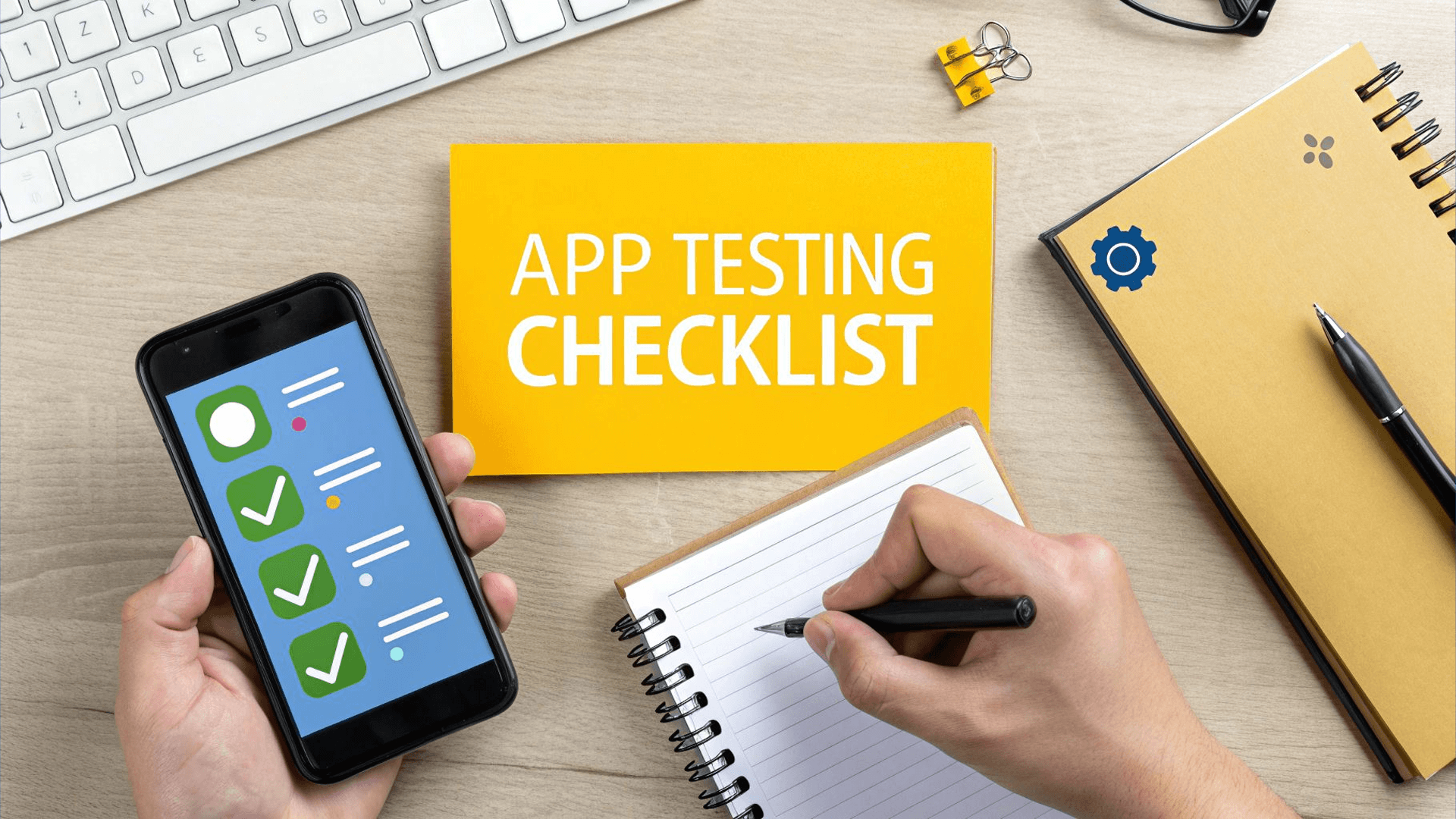
Starting mobile app development without a clear, written requirements checklist is one of the fastest ways to blow budgets, miss deadlines, and end up with a product nobody wants. In 2026 — with AI features becoming standard, stricter privacy rules, higher user expectations around performance and personalization, and rising development costs — a solid pre-development checklist is non-negotiable.
At Dreams Technologies in Coimbatore we run every new project through this updated 2026 checklist with our clients. Use it as your guide to prepare before approaching any agency or freelancer.
1. Business & Strategic Foundation
- Clear app purpose & single primary goal (what one problem does it solve best?)
- Target audience defined (age, location, tech literacy, device types — especially important in India)
- Success metrics / KPIs decided (downloads, DAU/MAU, retention day 1/7/30, conversion rate, LTV, churn)
- Monetization model confirmed (freemium, subscription, in-app purchases, ads, commissions, one-time purchase)
- Competitor analysis summary (3–5 direct & indirect competitors + what you do better)
- Unique value proposition / differentiation written in one sentence
2. User & Market Research Summary
- At least one user persona with goals, pain points, behaviors, device usage
- Main user journeys mapped (e.g. onboarding → core action → retention loop)
- Key user flows documented (login, signup, main action, payment, support)
- Minimum supported OS versions decided (iOS 15+, Android 10+ in 2026 is common)
- Offline support requirements (which screens/features must work offline?)
3. Core Functional Requirements
- Authentication method(s) (phone OTP, email, Google/Apple, biometrics)
- Core feature list prioritized (MoSCoW method: Must / Should / Could / Won’t)
- Must-have integrations decided (payments: Razorpay/PayU, maps: Google Maps, push: Firebase, analytics: Firebase/Amplitude/Mixpanel)
- Notification strategy (push, in-app, email/SMS fallback)
- Content & media requirements (who provides photos/videos? Max file sizes?)
- Multi-language / multi-currency needs (even if only English + one regional language at launch)
4. Non-Functional & Technical Requirements
- Target performance (first screen <2 s, 60 fps animations, smooth scrolling on mid-range devices)
- Minimum supported devices (screen sizes, RAM — critical in India)
- Data privacy & compliance (GDPR if global, DPDP Act India compliance, consent flows)
- Security baseline (HTTPS, encrypted storage, secure auth tokens, input validation)
- Accessibility basics (WCAG 2.1 AA level — contrast, screen reader support, large tap targets)
- App size target (<50 MB ideal for emerging markets)
- Update frequency expectation (quarterly vs monthly)
5. Design & Branding Requirements
- Existing brand guidelines (colors, typography, logo variants) or decision to create from scratch
- Design system expectations (consistent buttons, cards, spacing, states)
- Mandatory screens list (splash, onboarding, home, profile, settings, etc.)
- Dark mode support required? (yes in 2026 for most apps)
- First 2–3 screenshots vision (what appears in app stores — critical for conversion)
6. Admin / Backend / Business Operations
- Admin panel needs (dashboard, user management, content control, analytics view)
- Data ownership & export rights clearly stated
- Analytics & crash reporting plan (which tools?)
- Support & feedback mechanism (in-app chat, email, ticket system)
7. Launch & Post-Launch Planning
- Target launch date & platform priority (iOS first, Android first, or both?)
- App store metadata prepared (title, subtitle, keywords, description draft)
- Beta testing plan (number of testers, duration)
- Marketing & user acquisition channels identified
- Maintenance & support budget reserved (15–25% of dev cost per year)
8. Budget, Timeline & Team Alignment
- Realistic budget range agreed (MVP: ₹5–25 lakh in India depending on complexity)
- Timeline buffer included (add 20–30% for surprises)
- Decision on cross-platform (Flutter / React Native) or native
- Internal team roles defined (who handles content, approvals, testing?)
Print this checklist. Go through every point with stakeholders. Write short answers or “TBD” where needed. Only when 90%+ of items are answered clearly should you request quotes or start design.
A complete checklist like this typically saves 20–40% of total project cost by preventing mid-development scope changes — the #1 reason projects go over budget in 2026.
At Dreams Technologies we provide this exact checklist as a downloadable template during our free discovery calls. If you are planning an app and want to make sure you are truly ready, reach out. We will review your answers together and give you an honest timeline & cost estimate based on 2026 realities.
Do the checklist first — it is the cheapest and most valuable step you will take.
Get in Touch
Have questions? Fill out the form below and our team will contact you.