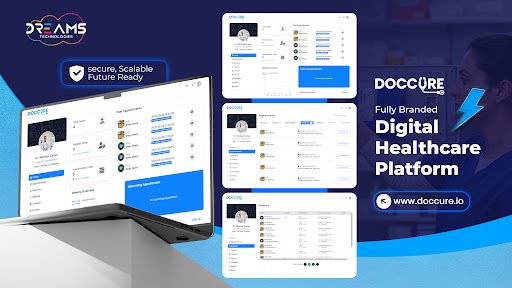
Remote patient monitoring software is changing modern healthcare. Today, care teams can track patient vitals in real time. They no longer need to wait for the next scheduled appointment. Instead, automated alerts and live dashboards keep providers informed at all times. For hospitals, fertility centres, and specialist practices, this shift is significant. Health outcomes are often shaped between consultations, not just during them. However, most providers have had very little visibility into that space. That is exactly the problem RPM solves. Doccure is a white-label telemedicine platform built by Dreams Technologies. It includes a fully integrated remote patient monitoring software module powered by IoT devices. In this article, we walk through how it works, what it tracks, and why it matters. What Is Remote Patient Monitoring Software? Remote patient monitoring (RPM) software collects patient health data outside of traditional care settings. It uses connected IoT devices to gather readings at home, in recovery, or between specialist visits, then sends that data securely to the care team in real time. IoT-enabled devices do the heavy lifting. Blood pressure cuffs, pulse oximeters, glucometers, and wearable sensors all feed data into a central platform. The care team can review trends and act quickly, without requiring the patient to come in first. The global RPM market continues to grow rapidly, driven by rising chronic disease rates, ageing populations, and healthcare workforce pressures. RPM is quickly becoming a clinical standard across fertility centres, rehabilitation units, and outpatient specialist practices. Why IoT Powers Effective Remote Patient Monitoring IoT the Internet of Things refers to physical devices with built-in sensors that exchange data over the internet. In healthcare, IoT devices form the data collection layer for RPM platforms. Here is why IoT-based remote vital signs monitoring works so well: ⦁ Continuous data — devices capture vitals around the clock, not just at clinic visits ⦁ Automated transfer — data moves from device to platform without manual input ⦁ Real-time alerts — out-of-range readings trigger instant notifications to the care team ⦁ Long-term trends — weeks and months of data become visible for better clinical decisions ⦁ Scalability — hundreds of patients can be monitored simultaneously without adding staff Without IoT, remote monitoring relies on patients self-reporting their readings. Self-reporting is inconsistent, delayed, and prone to error. IoT data, by contrast, is objective, continuous, and clinically reliable. Inside Doccure’s Remote Patient Monitoring Software: A Full Walkthrough Doccure’s RPM module sits within the same branded platform as scheduling, video consultations, records, prescriptions, and billing. There is no separate system to manage data flows seamlessly across the entire patient record. 1. Connected IoT Device Integration Doccure connects to a wide range of IoT-enabled medical devices. Once a device is linked, the platform begins receiving data immediately. A patient recovering at home after surgery stays connected to their care team through their device. A fertility patient on a hormone protocol can be tracked closely between clinic visits. In both cases, data arrives automatically and in real time. 2. AI Face Scan for Contactless Vital Signs Monitoring Doccure includes an AI-powered face scan feature for contactless vital sign monitoring using only a smartphone or tablet camera. The system reads facial blood flow patterns to estimate heart rate, heart rate variability, stress index, and oxygen levels. No wearable device is needed. This is especially useful for elderly patients, paediatric settings, and populations where hardware adoption is a barrier. 3. Real-Time Clinical Dashboard All incoming data populates directly into the provider’s clinical dashboard. The care team can view current vitals per patient, historical trends across custom date ranges, colour-coded status indicators and out-of-range alerts, and an aggregated population view for monitoring multiple patients at once. 4. Automated Alerts and Threshold Management Providers set individual thresholds for each patient based on their condition and care plan. When a reading crosses a threshold, the platform acts immediately: it notifies the assigned care team, logs the event in the patient record, and opens a direct telehealth consultation from the alert screen. Critical changes are never missed between appointments. 5. Patient Portal and Engagement Patients are active participants in Doccure’s model. Through the patient portal they can view their own vitals history, message their care team securely, complete symptom check-ins, and access medication and appointment reminders. 6. Full Integration Across Doccure Because RPM sits within the broader Doccure platform, data flows across the full care journey. RPM readings appear in the doctor’s screen before a telehealth call begins. Alerts can trigger automatic appointment bookings. Prescription updates based on monitoring data are saved in the same unified record. Which Healthcare Providers Benefit from Remote Patient Monitoring Software? Fertility Centres and Reproductive Health Practices Fertility protocols require close physiological tracking throughout each treatment cycle. RPM lets specialists monitor patient responses between visits and adjust protocols based on real data. Patients feel more reassured with continuous care connectivity. Chronic Disease Management Programmes Patients with diabetes, hypertension, cardiac conditions, or COPD need ongoing monitoring. Care teams can spot early signs of deterioration, adjust medications proactively, and reduce emergency presentations before they occur. Rehabilitation and Physiotherapy Centres Recovery from orthopaedic procedures, neurological events, and sports injuries can be tracked remotely. Physiotherapy providers adjust rehabilitation plans based on live data rather than waiting for the next in-person session. Specialist Outpatient Practices Dermatology, cardiology, and endocrinology practices can monitor systemic conditions and post-procedure recovery remotely delivering a higher standard of care without hospital-level infrastructure. How Doccure’s Remote Patient Monitoring Software Stands Apart Many RPM tools focus only on device connectivity and basic dashboards. Doccure takes a broader approach: Feature Doccure Typical RPM Tools Platform integration Full telemedicine suite Dashboard only Branding White-label, your brand Third-party vendor UI AI vitals Face scan + HRV + predictive analytics Device data only Pricing One-time cost, no subscriptions Per-patient or per-provider fees Specialty fit Multi-specialty, fertility, outpatient Primarily chronic disease Conclusion Health outcomes are shaped between appointments, not just during them. For too long, providers have lacked visibility into that space. Doccure’s remote patient monitoring software closes that gap connecting patients to their care team through continuous, real-time IoT monitoring. Hospitals, fertility centres, specialist practices, and outpatient providers all benefit. With Doccure’s white-label model and one-time purchase pricing, providers own their platform completely: no subscriptions, no vendor lock-in, no recurring fees. Ready to see Doccure’s IoT RPM module in action? Contact Dreams Technologies for a platform walkthrough tailored to your facility type and patient population.
Get in Touch
Have questions? Fill out the form below and our team will contact you.